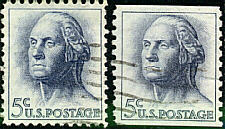
 Take a look at the two stamps to the left. What is the main difference between them?
Coil stamp
Take a look at the two stamps to the left. What is the main difference between them?
Notice that the stamp on the right has straight edges along the top and bottom. Have you ever seen stamps like this? They are called "coil stamps", and they come in long rolls. Because they are connected only to stamps on either side in the strip, they do not need perforations at the top or bottom. Generally, the size of the perforations are different from the same stamps printed in sheets like the stamp on the left.
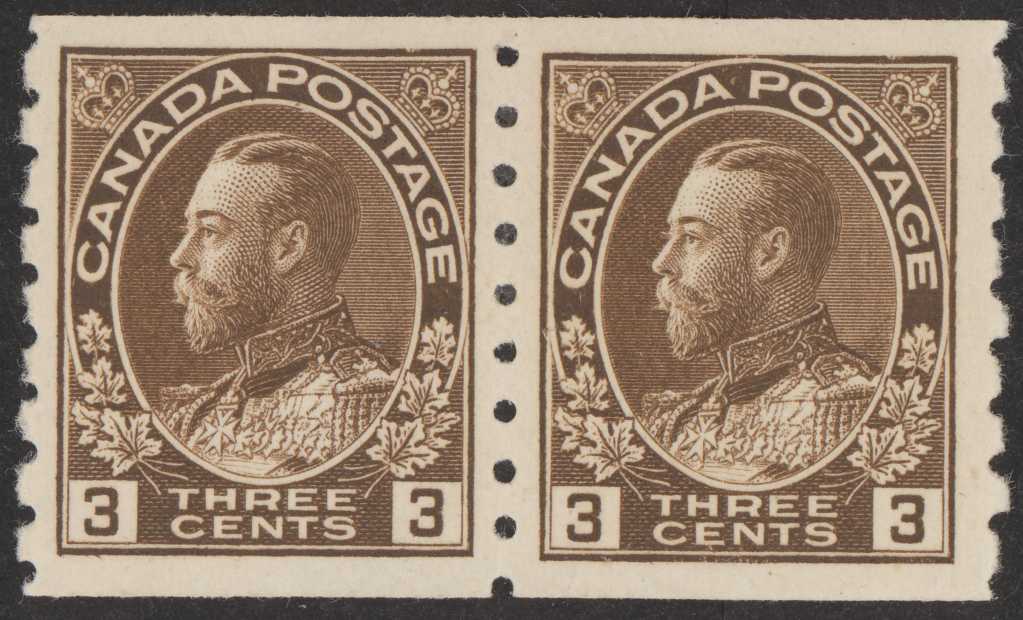
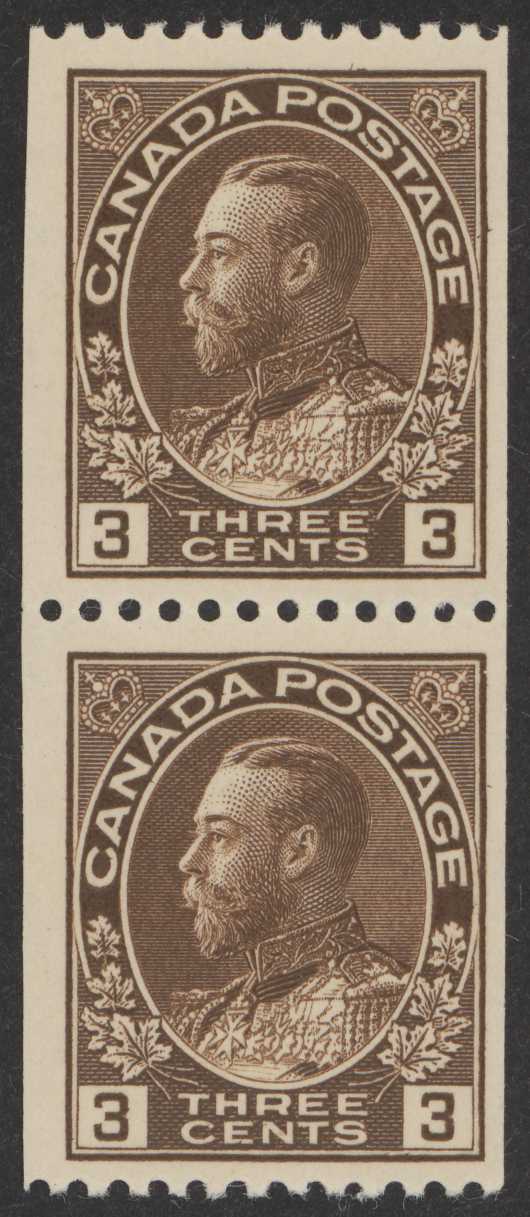
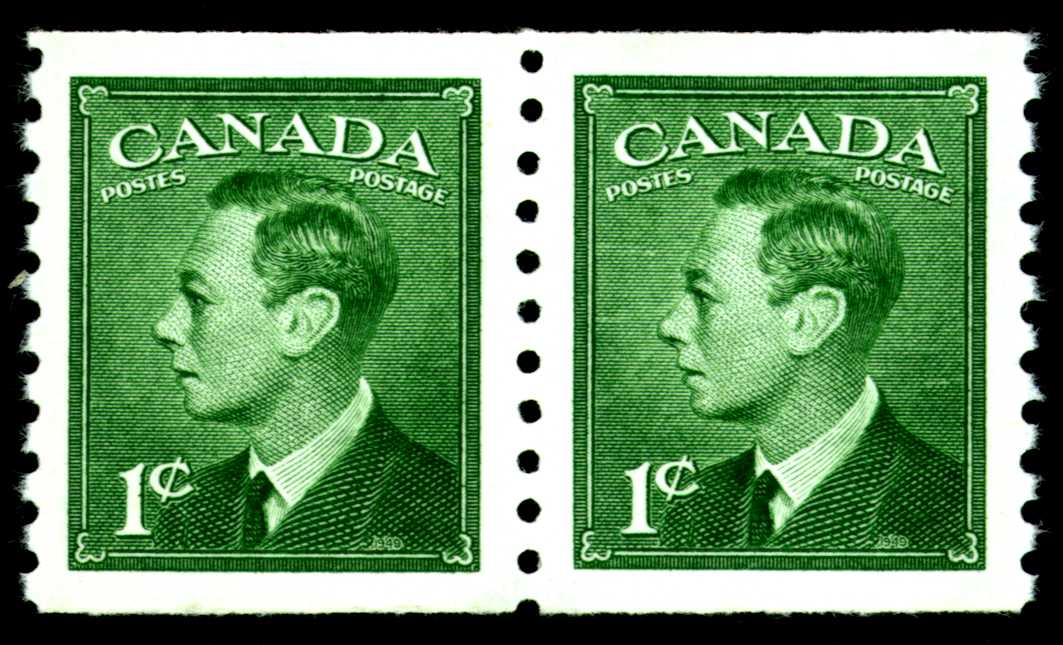
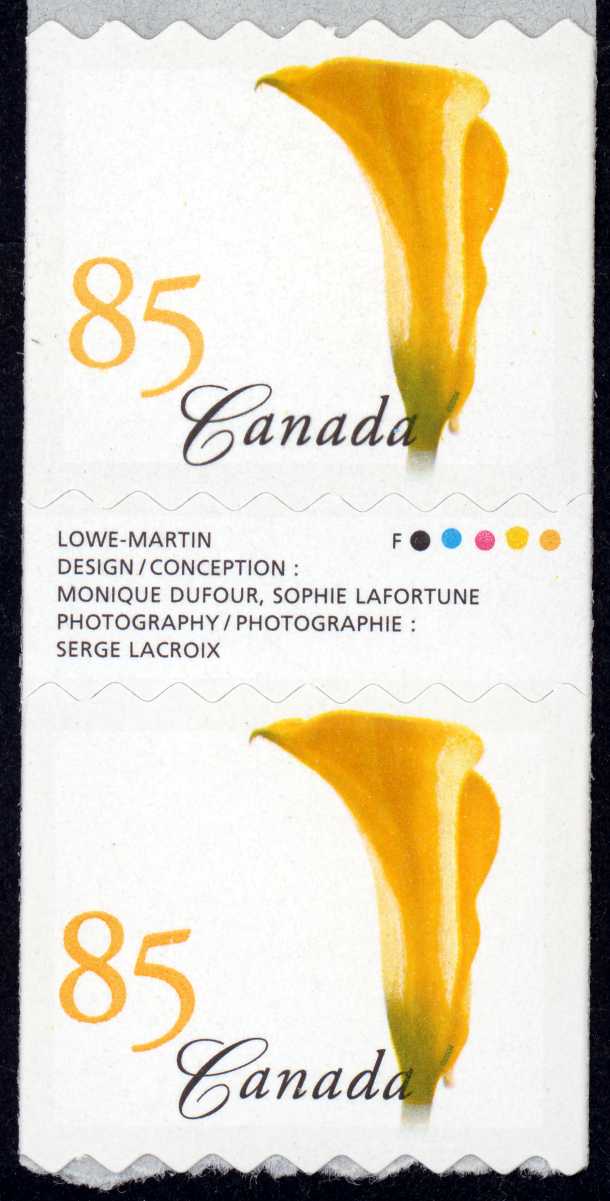
Here are more coil stamps issued between 1918 and 2004. The first and third examples were issued in horizontal rolls, and the second and fourth were issued in vertical rolls. The coil on the right was issued on self-adhesive paper. There are no perforations on this coil because the stamps were die cut at top and bottom to separate them.
Booklet stamp
Years ago, the Post Office began selling stamps in little "booklets" with front and back cardboard covers.
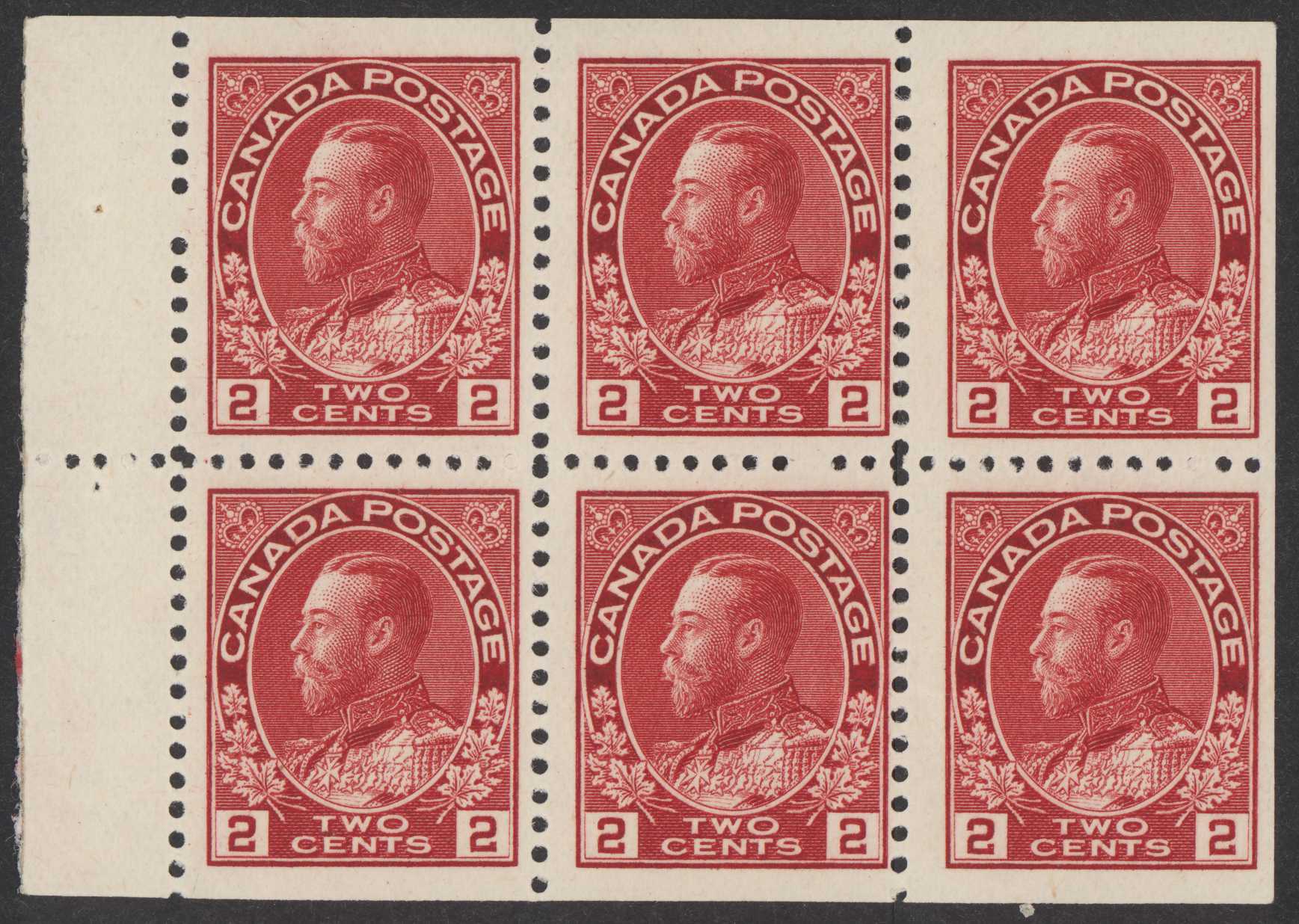
When you opened the cover, you saw a small sheet of perhaps six stamps called a booklet pane. Some booklets
had just a single pane. Others had several. As time went on, booklets gained popularity with the public
so the Post Office offered them in a wide variety of formats containing anywhere from three to 30 stamps
per pane.
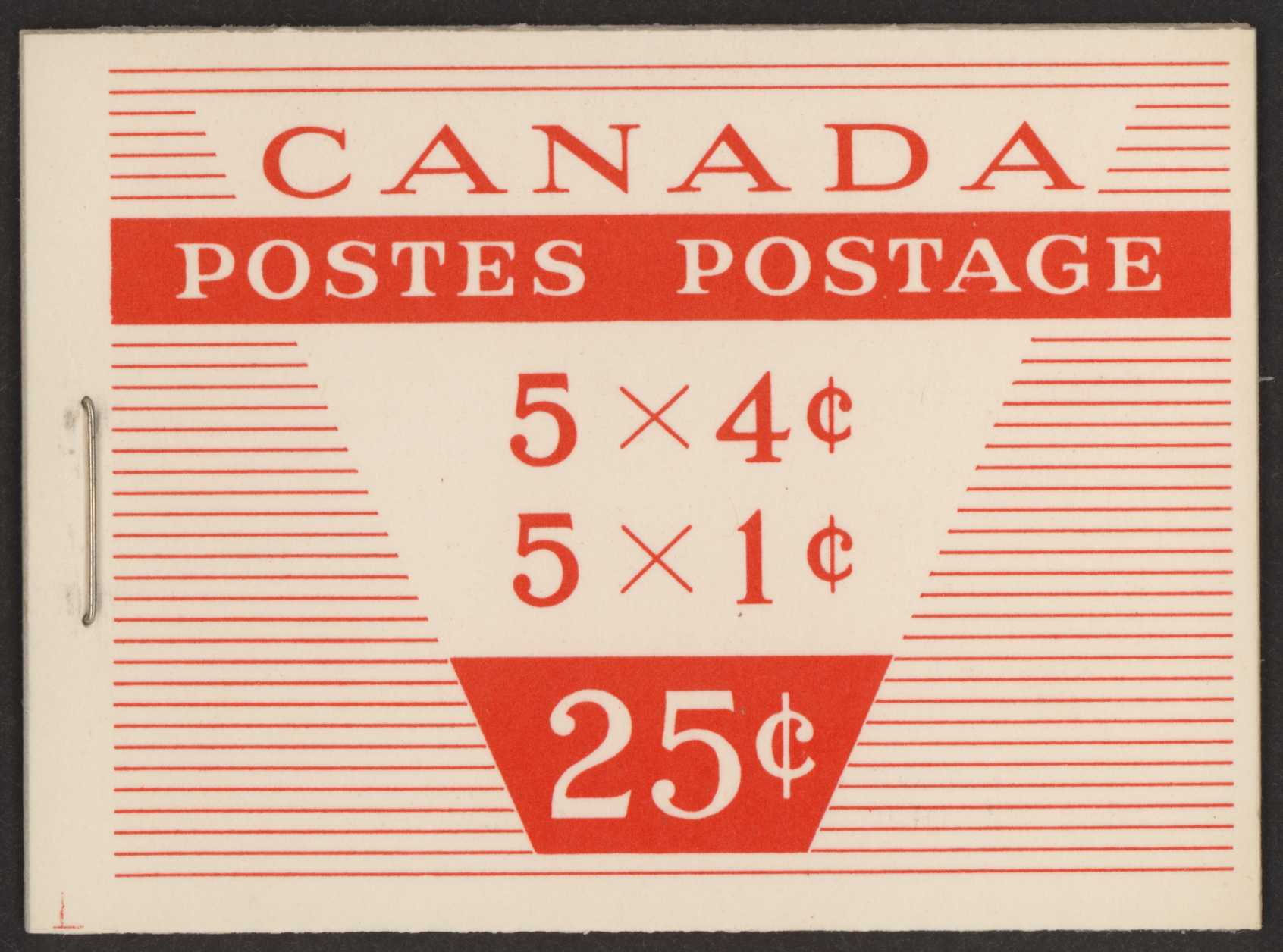
Here are examples. The first is the front cover of a complete booklet issued in 1963 with two stamp panes inside. Beside it is a booklet pane of six stamps issued in 1911.
Illustrated below is one of the smallest booklet panes. Issued in 1953, it consists of three stamps. The last item is a booklet pane of ten self-adhesive stamps issued in 2005. The "front cover" is the pane of stamps and the "back cover" is the backing paper from which the stamps are peeled off. Like the self-adhesive coil, the stamps were die cut to separate them so they do not have any perforations.
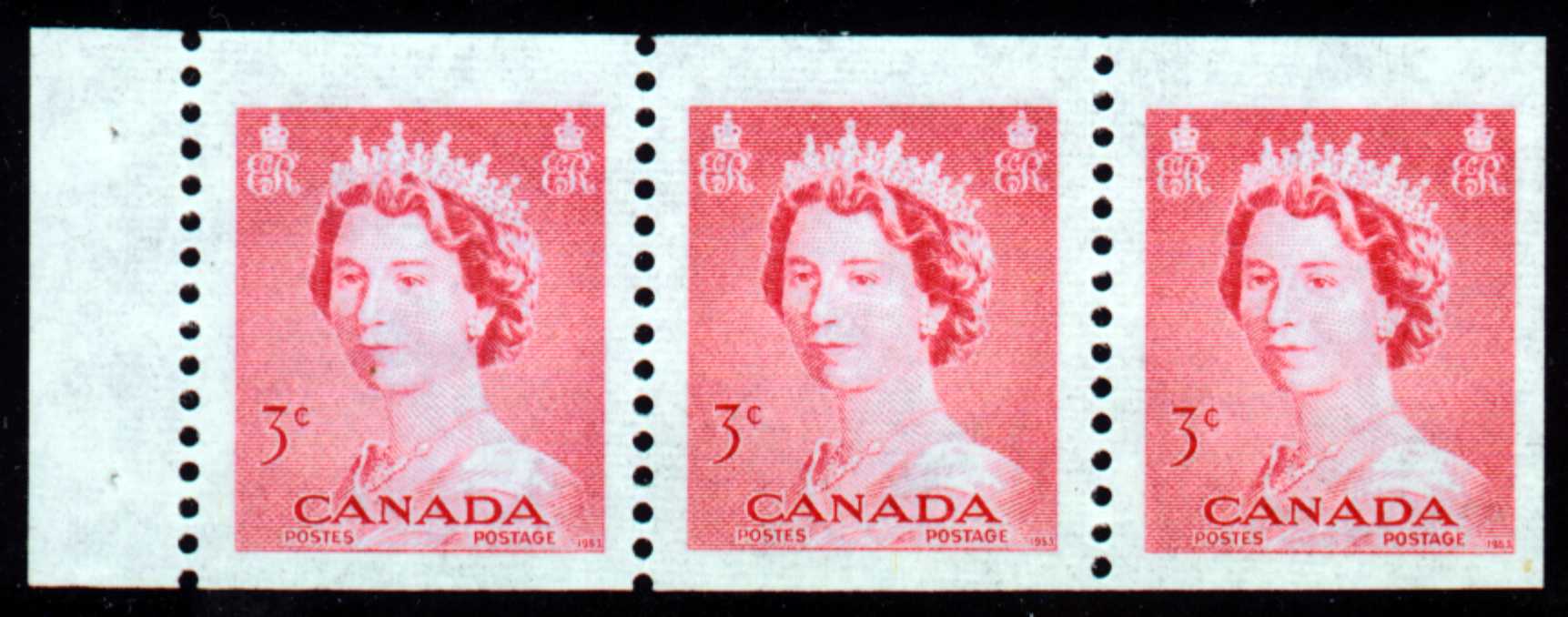
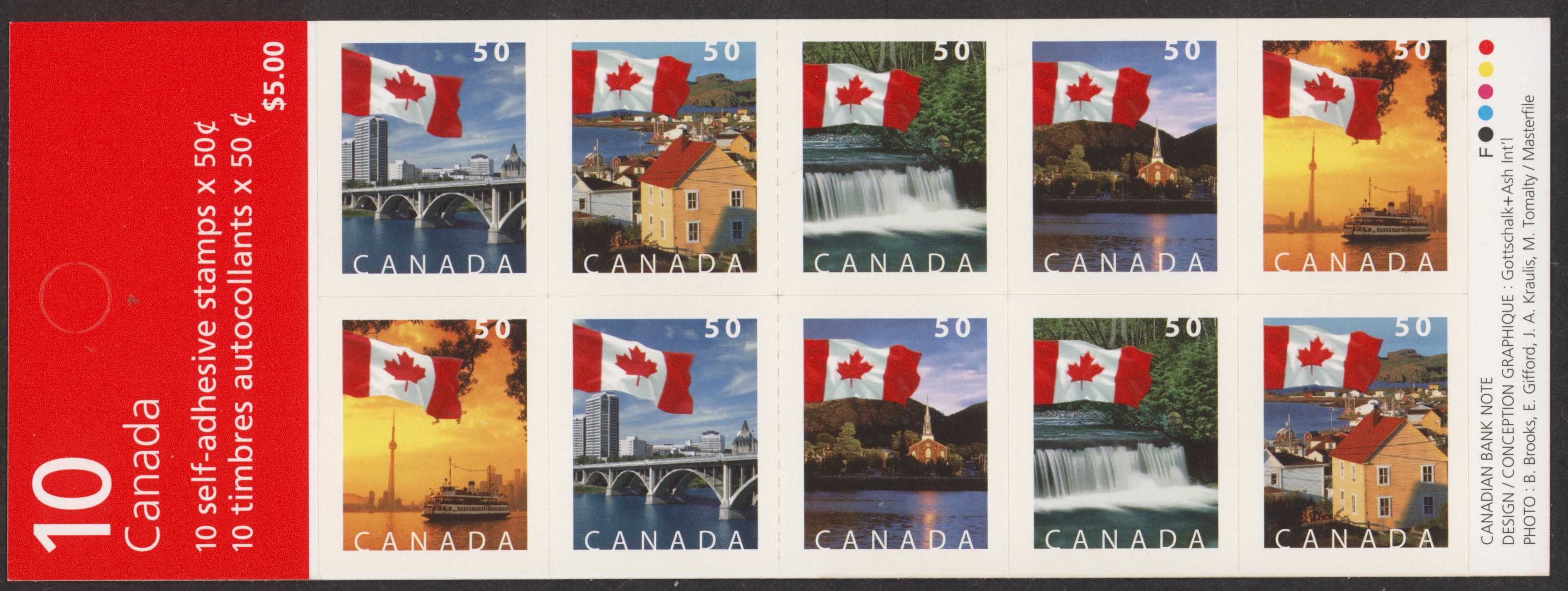
Plate block
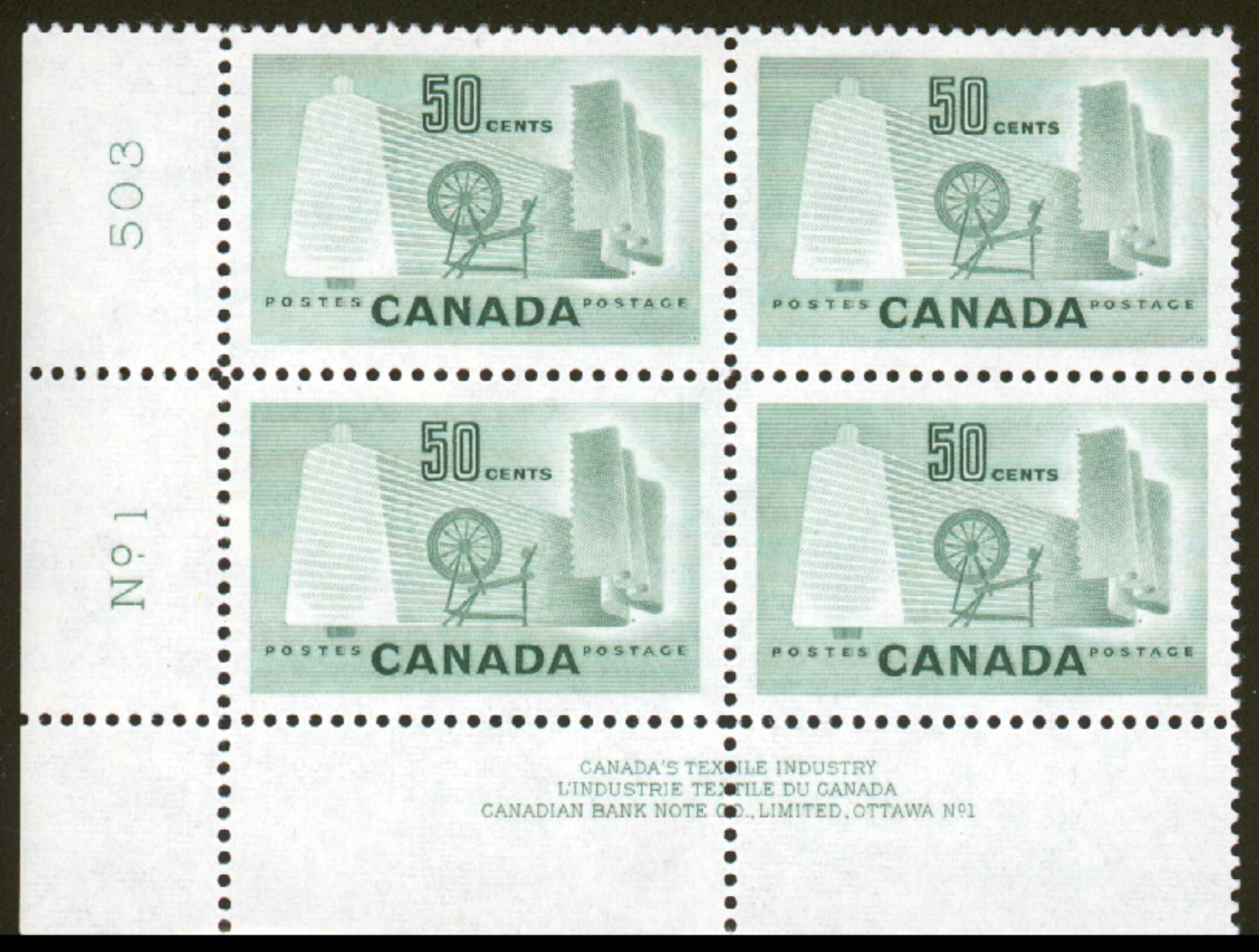
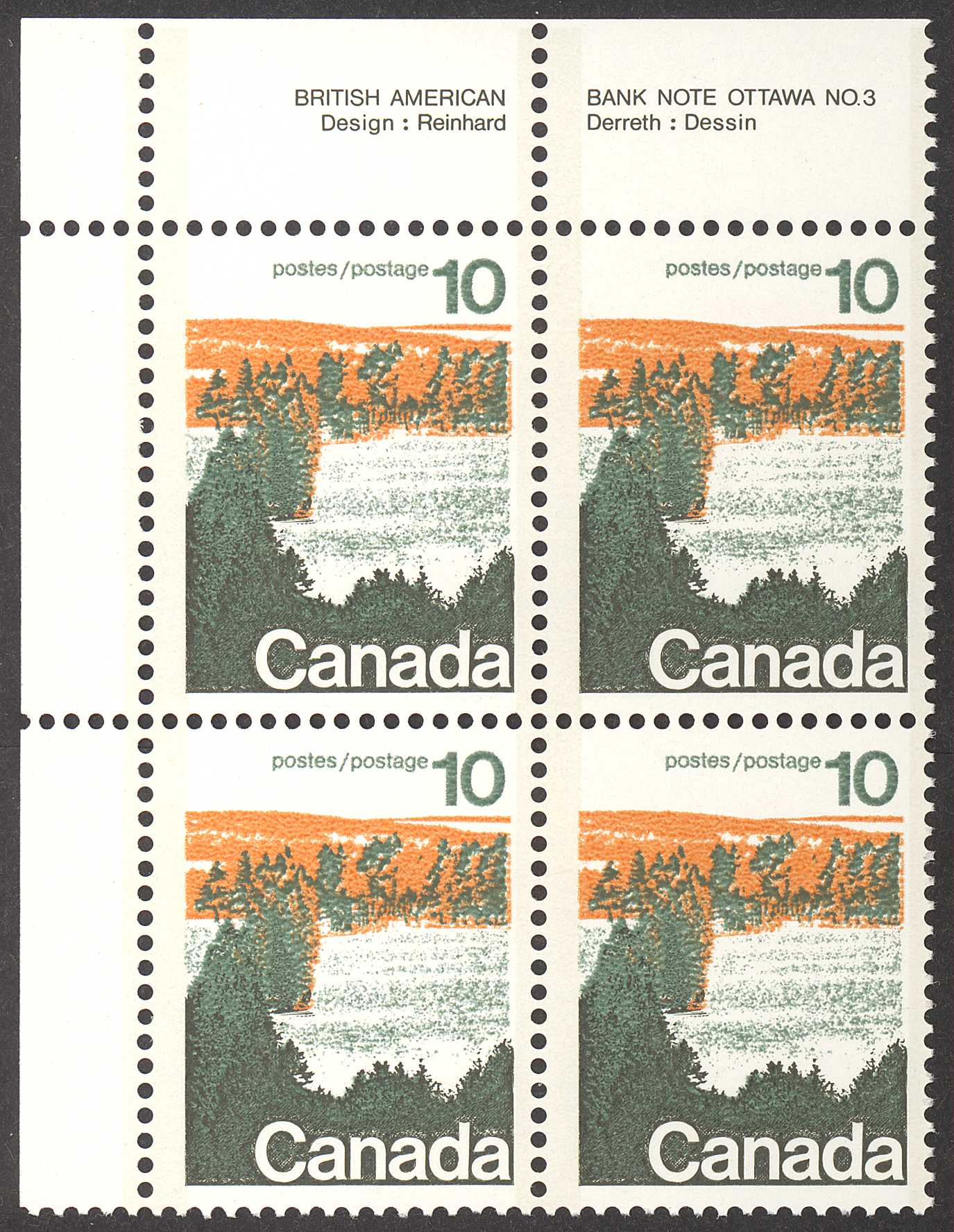
Sheets usually have a strip of blank paper around the edge called the sheet selvedge or sheet margin.
Long ago, the Post Office began printing information about the stamp in the sheet margin. This inscription
might include the name of the stamp printer and the stamp designer. If the stamp was printed using engraving,
the inscription usually included the number of the plate used to print the stamps. Many collectors collect
stamps in plate blocks to show the inscription.
Perfin
What an odd name! "Perfin" is short for "perforated initials" or "perforated insignia". What it means is
that there are perforations "in" the stamp that usually spell out a word or some initials. For example,
stamps used by the Government of Canada once had the initials OHMS punched into the stamp. This stood for:
"On His (or Her) Majesty's Service".
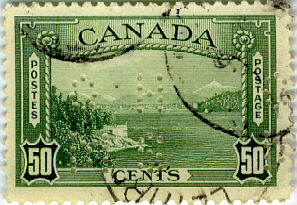
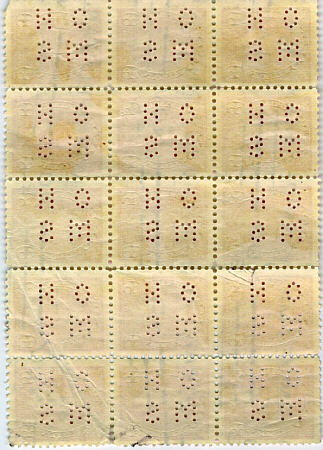
See the OHMS holes?
Here is a block of 15 stamps with OHMS viewed from the back. Did you notice that the letters seen from the back are backwards! The stamps don't look so healthy, do they? They were used on a parcel and have lots of wrinkles. But don't worry too much about that if you like the stamps.
Mourning cover
If you collect covers, you might see one sometime that has a black strip all around
its edges. This was used to announce someone's death and was called a "mourning cover". This is just one
of several kinds of interesting covers that people collect.
Hairline
When steel plates are used to print stamps, tiny cracks occasionally appear in
a plate. These cracks produce lines in the image of the stamp that can be seen with a magnifying glass. Unless
the plate was repaired, these lines appeared in all the sheets printed after the cracks formed.
Proof
Printers of stamps often tested their plates by printing sheets that were never intended for postage.
Sometimes, these were to demonstrate the stamps to the governments that were having them made. A proof
made from a single image on a "die" is called a "die proof". Proofs consisting of full sheets are called
"plate proofs". These were made in the colour of the final product used for postage.

Some proofs were made in other colours, to show what those colours would look like. These are called Trial Colour proofs. Many of the proofs, of all colours, were overprinted with the word 'specimen', displayed horizontally, vertically, or diagonally.

Canadian proofs, such as those shown, were printed on "India" paper and mounted on light cardboard.